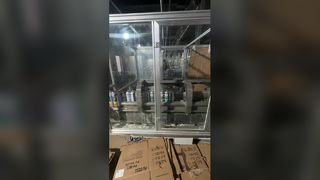
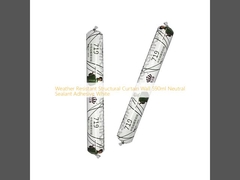
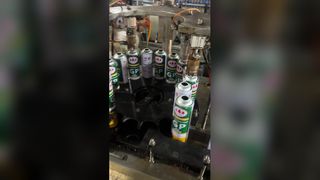
Brief: From concept to demonstration, this video highlights the evolution and practical outcomes of acid silicone sealant applications. You'll see a detailed walkthrough of its proper application process, from surface preparation to final curing, showcasing its use in sealing glass edges, windows, doors, ceramic tiles, and aluminum frames for various construction and home improvement projects.
Related Product Features:
Excellent weather resistance, withstanding extreme temperatures from -40℃ to 150℃ and resisting sunlight, rain, and ozone erosion.
Strong adhesion to most common building materials like glass, aluminum, and ceramic without requiring a primer.
Good flexibility after curing, allowing it to absorb thermal expansion and contraction of substrates.
Waterproof and moisture-proof properties, forming a dense, impermeable film ideal for wet environments.
Easy to construct as a one-component product with smooth extrusion and no on-site mixing required.
Cures at room temperature by reacting with air moisture, forming a durable, rubber-like material.
Suitable for indoor and outdoor scenarios, adapting well to construction and home improvement environments.
Versatile applications including architectural glass engineering, home decoration, and industrial sealing.
FAQ's:
What is the curing process for acid silicone sealant?
Acid silicone sealant cures at room temperature by reacting with moisture in the air. Initial curing typically takes 2-4 hours, while full curing to reach maximum performance requires 24-48 hours, depending on environmental temperature and humidity.
On which materials can acid silicone sealant be used?
It exhibits excellent adhesion to a wide range of substrates including glass, aluminum, ceramic, and most non-porous materials commonly used in construction and home improvement.
Is acid silicone sealant suitable for outdoor applications?
Yes, it offers excellent weather resistance, withstanding extreme temperature fluctuations from -40℃ to 150℃ and erosion from sunlight, rain, and ozone without cracking or losing elasticity.
How should acid silicone sealant be applied for best results?
Ensure surfaces are clean, dry, and free of contaminants. Cut the nozzle at a 45-degree angle, extrude evenly with a caulking gun, smooth with a tool dipped in soapy water within 5-10 minutes, and allow proper curing time.